Solar output drops 14% in July. Here’s why that’s a design problem and not a weather problem
For food and agro processing facilities in Romania, July and August bring the highest energy loads of the year - refrigeration, cooling, production at full capacity. This is also when thermal performance gaps in a solar system become visible in the monitoring data.
There’s a number worth knowing before you look at your July production data: -0,35% / °C.
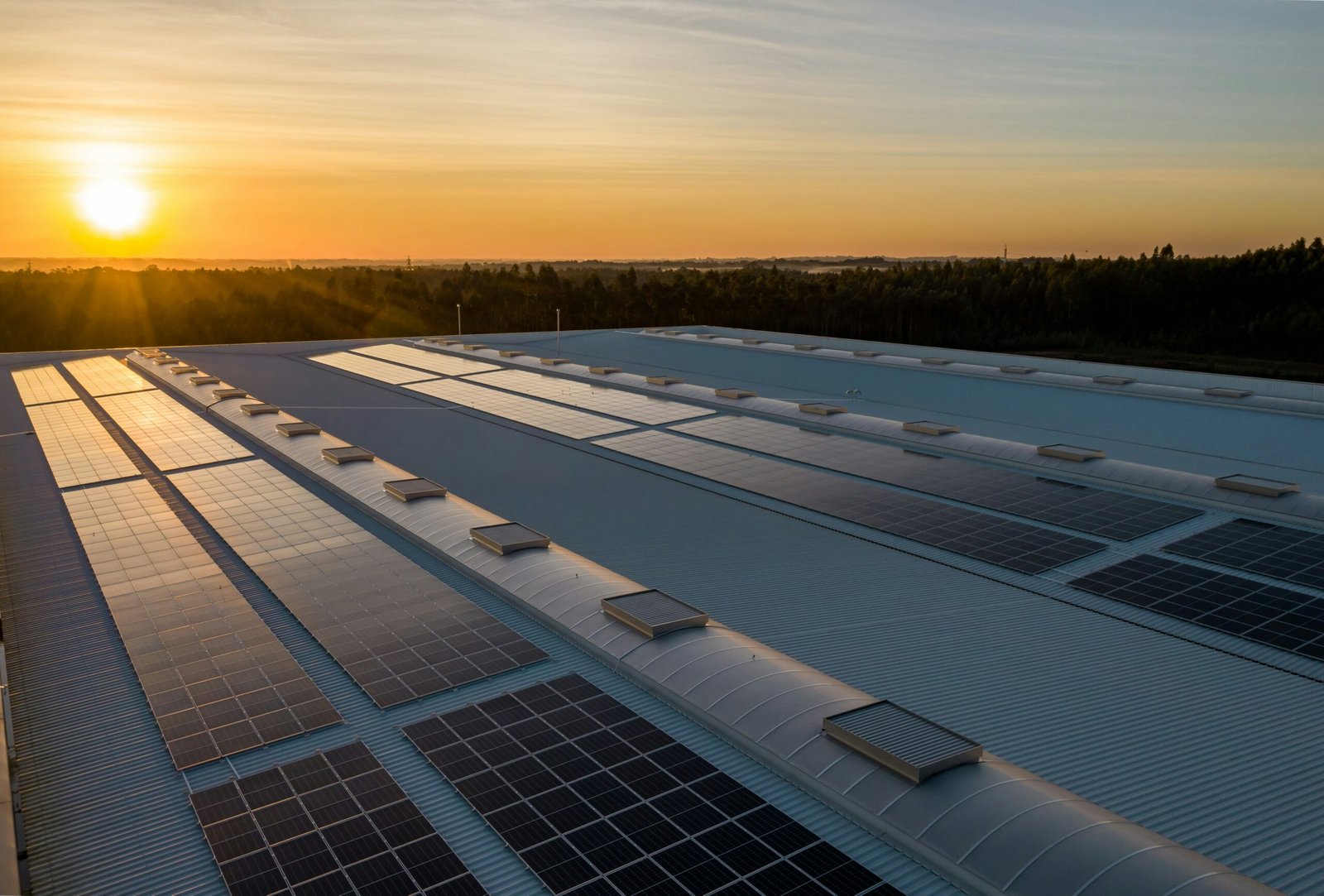
That’s the temperature coefficient of a standard panel, the rate at which output falls for every degree above 25°C. On a metal rooftop in Romania in July, panel surface temperature reaches 60-65°C routinely. Run the math: 40 degrees above STC (Standard Test Conditions), multiplied by 0,35, and you’re looking at a 14% output reduction from nameplate rating.
On a 500 kW installation, that’s 70 kW missing every peak afternoon hour.
On a food processing facility running refrigeration, pasteurisation, and packaging lines simultaneously – exactly the load profile of July and August – that gap lands in the most expensive window of the day.
The system keeps running, monitoring stays green, but the shortfall only becomes visible when someone pulls the performance ratio data and compares it against the yield model.
The temperature coefficient matters more than most EPC quotes acknowledge
Panel technology selection is usually framed around price per watt. The thermal conversation happens less often, and for facilities in this sector, it’s the one that affects real summer output.
Panel technologies vary in how they handle heat. More advanced cell architectures carry temperature coefficients closer to -0.24%/°C, compared to -0.35% for standard options. At 65°C operating temperature, that difference recovers roughly 4–5% in output.
On a large industrial rooftop running high summer loads, that percentage has a direct figure attached to it.
The right choice depends on the facility’s consumption profile, roof orientation, and investment logic – and the conversation belongs at the design stage, before procurement begins.
Inverter derating is silent, common, and measurable
Inverters throttle output when internal temperatures exceed operating thresholds. It’s a built-in protection mechanism that activates automatically: no alerts, no flags in the monitoring dashboard.
In practice, an inverter installed in a south-facing equipment room with inadequate ventilation will begin derating on clear summer afternoons. The hours between 12:00 and 16:00 – peak irradiation, peak demand for a processing facility – are exactly when derating is most likely to occur.
What to look for in your data right now: consistent underperformance against modelled output in the 11:00-15:00 window on clear days, particularly when ambient temperatures exceed 32°C. That pattern is the signature of inverter thermal stress.
The right approach at the design stage is straightforward: inverter placement with adequate airflow, derating margins built into yield modelling, and active cooling where equipment room conditions require it.
Your July load profile is your real sizing benchmark
Annual consumption figures are useful for understanding a facility’s overall energy balance.
The sizing that matters for a food or agro processing operation, though, comes from a different layer of the data.
In a food or agro processing facility, July and August consumption runs 40–60% above December baseline, driven by refrigeration loads climbing with ambient temperature, production volumes at their seasonal peak, and cooling systems running hours they don’t log in winter.
A system sized on annual averages will be well-calibrated for spring and autumn, cover a reasonable share of winter baseload, and leave the facility drawing premium-tariff grid power during the hours and months where solar coverage carries the most value.
Correct sizing for this profile starts with hourly consumption data across a full year, with explicit attention to the summer peak. The resulting system looks different – and performs differently in July – from one sized on aggregate kWh.
What to check in your monitoring data this week
If your installation went live between 2022 and 2024, this summer is worth a close look. A few metrics tell most of the story:
- Performance ratio on clear days should be stable relative to your commissioning baseline. A summer drop – controlling for irradiation – points toward thermal losses at panel or inverter level above what the model anticipated.
- Peak-hour output on the hottest days should track against modelled figures for your location. Consistent shortfalls on days above 35°C ambient, on an otherwise clear sky, indicate thermal derating or cell temperature losses that the original yield model underestimated.
- Self-consumption rate in July should be higher than in any other month, given the load profile of a processing facility in summer. A figure running below spring levels suggests the system is undersized for your actual peak, and you are covering the difference from the grid at the worst possible tariff.
Design quality shows in the summer
A system engineered for real operating conditions – thermal modelling based on local climate data, inverter sizing with derating margins, string design built around the specific rooftop – performs consistently when load and heat both peak together.
A system designed for a price point reveals the distance between the two in July monitoring data.
At Wiren, thermal performance is part of every engineering conversation from the first site visit, because the performance figure that matters is in the data from this July, and every July after it.
Running a food or agro processing facility and want to review your summer performance data? Or scoping a new installation and want to understand how design decisions affect real operating output? Reach out to the Wiren engineering team!